
How Tokyo Became Demon Slayer's Biggest Co-Star
Train stations became portals, eight wrapped taxis circled the 23 wards, and a 29-meter billboard took over Ikebukuro for a month. The Infinity Castle campaign did not just promote the film — it staged the story across the entire city.
After sunset in July 2025, demons started appearing on the metal shutters of closed shops in Shibuya. Night-only ads that vanished by morning. Fans went out hunting them with their phones under the hashtag #渋谷ニ鬼ノ気配アリ — “there is a demon’s presence in Shibuya.” That was one piece of a larger picture. The campaign for Demon Slayer: Kimetsu no Yaiba The Movie: Infinity Castle 無限城 (Mugen-jo) Part 1: Akaza Returns turned central Tokyo into an extension of the film itself.
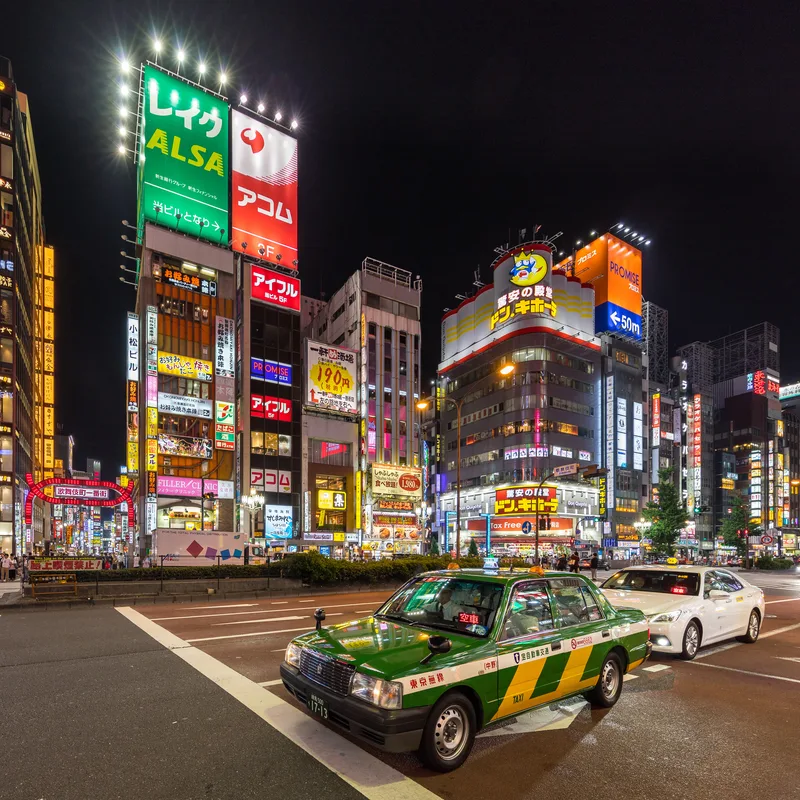 Yasukuni-dori Avenue, Shinjuku, Tokyo. The east exit of JR Shinjuku Station received the “Kimetsu Gate” installation in July 2025. Basile Morin / Wikimedia Commons (CC BY-SA 4.0)
At Shinjuku Station, the city became a portal. From July 14, the east exit of JR Shinjuku received the “Kimetsu Gate,” an installation designed around the Infinity Castle, with character visuals and posters spread through the underground passages as well. It ran through July 27.
Ikebukuro went further. Outside the north gates of JR Ikebukuro Station, a 29-meter structure called the “Kimetsu WALL” displayed the Hashira at full scale. According to Oricon, it was the first time a single property occupied every poster slot in that corridor for an entire month. The installation ran through August 17.
The taxis joined too. S.RIDE put eight character-wrapped cabs on the road — one for Tanjiro, one per Hashira — from July 8 to August 11. The app showed each vehicle live on the map with character icons. You could try to summon your favourite character’s taxi.
Sunshine City in Ikebukuro added its own wave a few months later: stamp rallies, themed restaurant menus and a keyword rally at the aquarium, running September 5 to November 9. That second push came after the main July campaign, but it made the same point. This was not a cinema-only promotion.
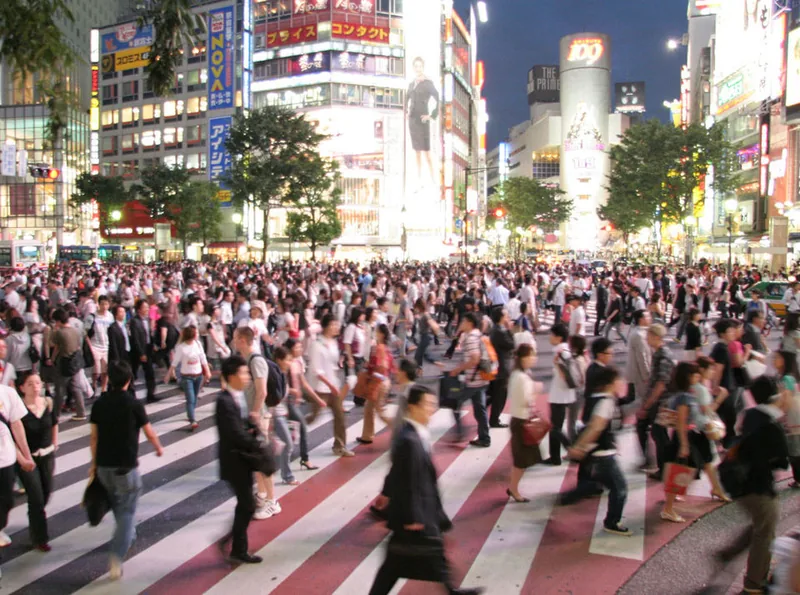 Shibuya, Tokyo, at night. In July 2025, special Demon Slayer ads appeared on the metal shutters of closed shops after sunset, disappearing each morning. Bantosh / Wikimedia Commons (CC BY 2.5)
Western studios buy billboards. In Japan, tie-ups (タイアップ, tai-appu) synchronise urban infrastructure — train station, taxi fleet, shopping complex, music app, observatory, aquarium — around a single film inside the same commercial window. Infinity Castle did not appear in advertisements. The city performed it.
The numbers match the scale of the effort. The film passed 20 million tickets sold in Japan within 45 days. By March 29, 2026, it had cleared 27.34 million tickets and 40 billion yen in the domestic market. That is the kind of result that justifies closing an entire station corridor for a month.
Part 2 is actively in production, but has no official release date yet. When Tokyo next makes room for Demon Slayer, it probably will not stop at posters. It will be the whole city again.