
Berserk Returns, and the Credits Line Shows How Miura Still Signs the Work
Young Animal brought Berserk back on June 12, with three consecutive chapters. The official credit says it all: original work by Kentaro Miura, art by Studio Gaga, supervision by Kouji Mori.
On June 12, 2026, Berserk reappeared in Young Animal, the magazine published by Hakusensha. Issue No.12 carried the first of three new consecutive chapters, with follow-ups scheduled for June 26 and July 10. The magazine itself framed the return as the opening part of a run the whole world had been waiting for.
The news, though, is not simply that Berserk is back. The credits line tells a bigger story: original work by Kentaro Miura, art by Studio Gaga, supervision by Kouji Mori.
Miura died in May 2021, aged 54, of acute aortic dissection. Five years on, he remains at the centre of the official credit. Not as a footnote. As the original author. That changes the meaning of the continuation. Berserk is not being presented as a reboot, a remake, or another creator’s work. It is being carried as a work that still orbits the memory of its author.
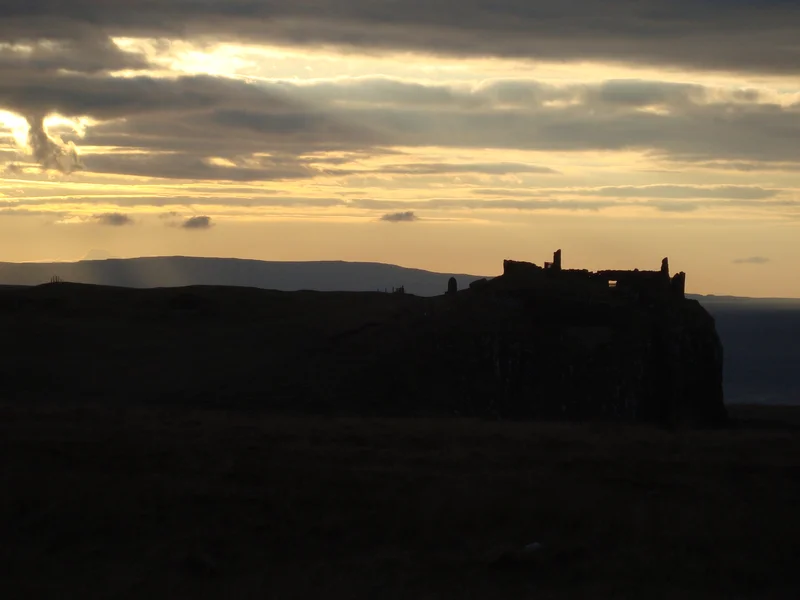 Castle ruins at dusk, Isle of Skye. Structures outlast the hands that built them. Lesley Kirkwood / Wikimedia Commons (CC BY-SA 3.0)
In many markets, a work like this would be sold as a reboot or a licensed continuation, with the late creator’s name pushed down to a “based on” line. The Japanese logic of editorial continuity runs differently. Here a work can carry on as an entity of its own, with the original author kept as a present absence: the centre of gravity no one replaces but everyone orbits.
Kouji Mori is the piece that makes the arrangement possible. A friend of Miura since their youth and a manga artist in his own right, he took on the supervision after the author’s death. The explanation given when the series resumed in 2022 was simple and careful: Miura had told Mori the essential parts of where Berserk was meant to go. Mori does not write as a replacement. He acts as the keeper of a memory received in conversation.
Studio Gaga is the hand. Formed by assistants who worked with Miura, the studio draws the new chapters without turning the continuation into one individual’s signature. Where another industry would print “art by” a single name, the credit here insists on a different logic: the craft stays with the house, the memory stays with the friend, and Miura’s name remains the centre of gravity.
That is the Japan-first point of this return. The comeback does not erase the absence. It organises the absence. Miura stays as the original author. Mori keeps what he was told. Studio Gaga turns that memory into pages.
In the story itself, Guts also returns from inside the darkness. Young Animal’s preview frames the new chapter’s central question: what he will see after being sealed inside the shrine. For readers who follow Berserk as tragedy, this is more than a publishing resumption. It is a work about surviving the abyss, continuing even after the real loss of the person who created it.
A 48-hour free-reading campaign on Young Animal Web reinforced the gesture. The series came back, readers revisited the road so far, and the next chapters already have dates. Berserk continues. But the credits line is clear: it continues without pretending Miura has been replaced.